LED Tail Lights: What to Check Before You Buy (Sequential Signals, Wiring and Inspection)
By the PartMate team8 min read
In this article
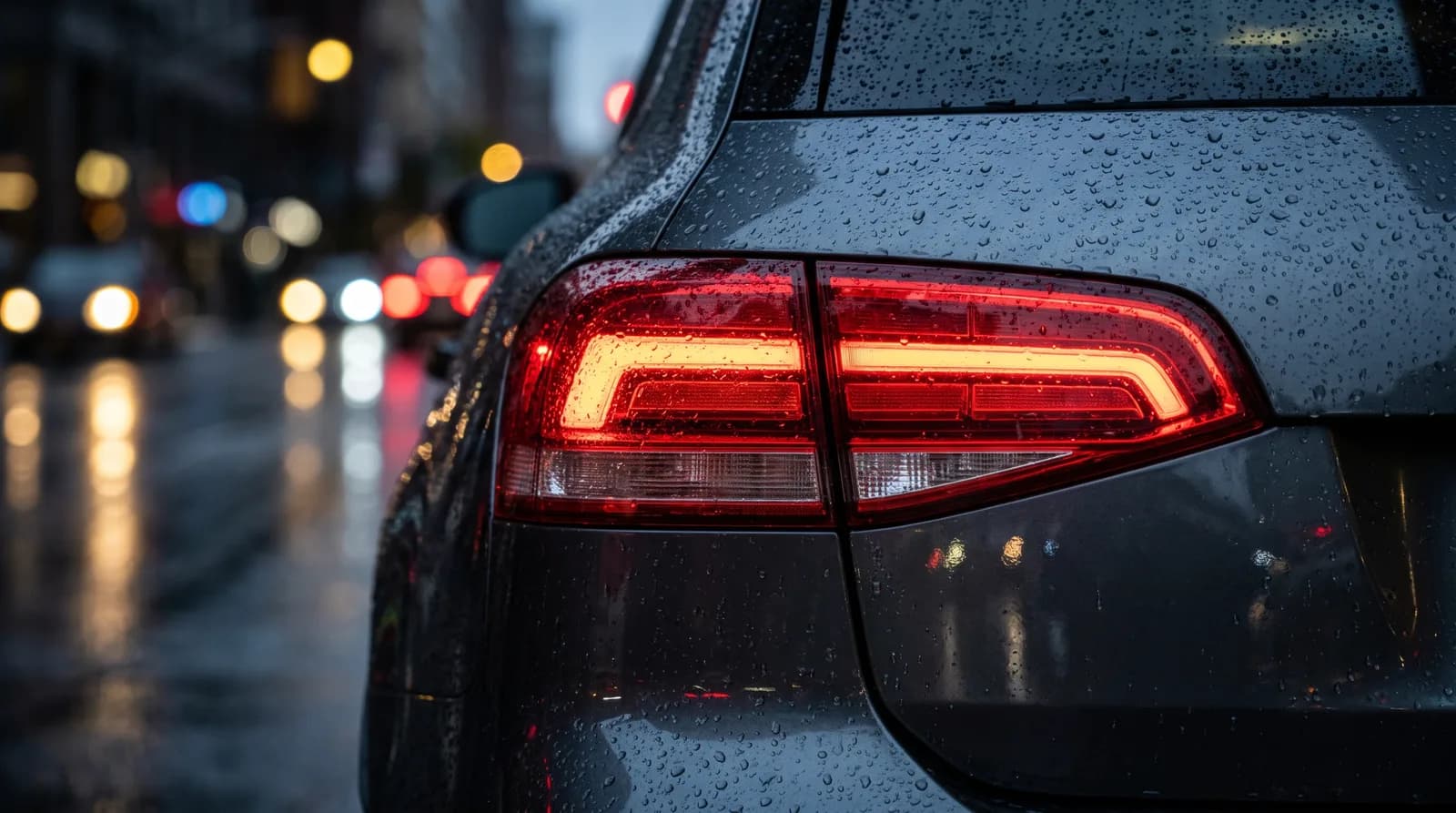
Your tail lights are the one part of the car that speaks to everyone behind you: I am here, I am braking, I am turning. An LED set makes that message sharper and gives an older car a newer face. It can also bring fast-flashing indicators, dashboard warnings and a failed inspection if you buy the wrong one. This guide covers what to check before you pay.
What a tail light has to do
A rear lamp cluster usually combines up to five functions, and international rules fix the colour of each:
- Rear position (tail) lamps: red.
- Stop (brake) lamps: red.
- Direction indicators: amber under the UN regulations. US rules allow amber or red.
- Reversing lamps: white.
- Rear fog lamp: red.
If a set comes in versions with amber or red indicators, amber is the safer choice. A US National Highway Traffic Safety Administration study found amber rear signals were 5.3 per cent effective in reducing crashes in which a turning, merging or lane-changing car is hit from behind. One example is our Camry XV40 LED tail lights with amber signals.
Sequential indicators: allowed, with conditions
The "flowing" indicator that sweeps outwards is legal under the UN lighting regulations, as long as it behaves in a defined way:
- it runs from the inner edge towards the outer edge;
- each segment stays lit until the end of the flash;
- the sweep finishes within 200 milliseconds;
- it forms one continuous line, not a wave.
An indicator may not switch between static and sequential mode once it is on. When you press the hazard button, every indicator must flash in the same mode.
The US federal standard does not mention sequential indicators at all. NHTSA has ruled on individual designs case by case.
In practice, buy a set made for your model by a maker that builds to these rules, rather than a universal strip. Examples in our range are FJ Cruiser LED tail lights with a dynamic signal, Patrol Y62 OE-style lights with a dynamic signal and F-150 tail lights with a sequential turn signal.
Many LED sets also play a "welcome" animation when you unlock the car. That is a parked-car feature. On the road, what counts is how the indicator and brake light behave.
Complete lamps, not LED bulbs in old housings
There are two ways to "go LED". You can replace the whole lamp with an assembly designed for LEDs, or you can push LED bulbs into the original housings. The first is the reliable one.
A reflector designed around a filament bulb does not spread an LED's light the way it was approved to. Lighting manufacturers say so themselves: OSRAM states that some of its LED replacement bulbs have no ECE approval and must not be used on public roads in any exterior application.
A complete assembly built for your model should be plug-and-play: same connectors, same mounting points, no cutting. Two things still need checking:
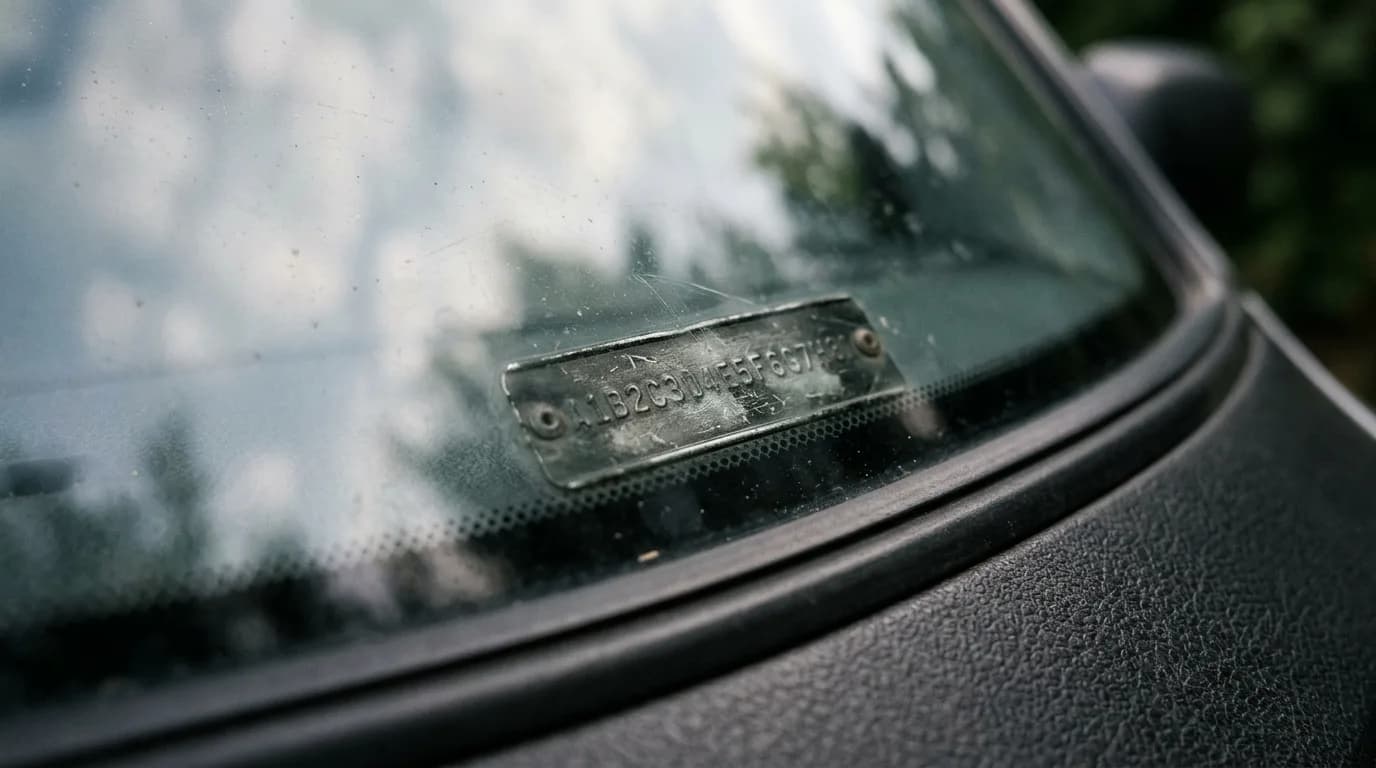
- The year range. A facelift often changes the lamp shape or the plug. Our guide to checking fitment by VIN and model year shows how to confirm yours.
- The approval markings on the lens. Our LED headlights guide explains what DOT, SAE and E-marks mean.
Popular full sets include the Land Cruiser LC200 2016–2021 tail light set, Hilux Revo LED tail lights and Tundra LED tail lights. Browse every model in Tail Lights.
Fast flashing and dashboard warnings
If your indicators start flashing twice as fast after an LED upgrade, nothing is broken. The car is doing what the rules require.
The flasher detects a failed bulb by the current it draws. A malfunction must be shown by a marked change in the flash rate. An LED draws far less current than a filament bulb, so the car concludes the bulb has blown. Newer cars with a body control module may show a "lamp out" message instead, or make the LEDs flicker.
There are three fixes:
- An LED-compatible flasher relay, on cars with a separate relay. It restores the normal rate and keeps the bulb-failure warning.
- A CAN-bus adapter or decoder, wired in parallel with the lamp. OSRAM describes these as a bypass of the car's lamp-failure detection.
- A load resistor. It simulates a bulb by burning the same power as heat. OSRAM warns that its control unit gets hot. Mount it on metal, away from plastic trim and wiring.
Options 2 and 3 have a catch: once the failure warning is bypassed, the car will not tell you when an LED really fails. Walk round the car with the lights and indicators on every few weeks.
A good model-specific assembly usually has this handled inside the lamp. Ask before you buy whether it needs anything extra on your car.
Smoked or clear lenses
We found no UAE rule that names smoked tail lights. The rules that apply are about function:
- Lights not working: AED 400 and six black points in the federal fines table.
- Indicators or rear lights not working: AED 400 and two black points.
- Modifications: the UAE government portal says vehicles may not be modified in structure, engine or colour without the licensing authority's prior approval.
Lighting is also one of the things the annual test checks. In RTA figures published in 2016, lighting problems accounted for 10.3 per cent of failed vehicles.
The practical difference is between a lamp designed smoked and a lamp made smoked afterwards. A tinted assembly is engineered with LEDs bright enough to work behind its lens, like our Patrol Y62 smoked LED tail lights. Tint film or spray on an existing lens simply cuts the light the lamp was approved with. If you are unsure, ask your inspection centre before you buy. Our guide to legal car modifications covers the approvals.
Condensation: normal or a leak?
Tail lights are not sealed boxes. They breathe through small vents, so a light mist on the inside of the lens after a cool night or a car wash is normal. HELLA and Nissan both describe it as harmless.
LED lamps take longer to clear it than filament lamps because they give off almost no heat at the lens. Audi notes that leaving the lights on does not clear the moisture.
Droplets that run, or water collecting at the bottom of the lamp, are different. That points to a damaged seal, a blocked vent or water creeping in along the wiring. Check the gasket and the vents. If water keeps coming back, replace the lamp before it corrodes the circuit board.
Are LED brake lights safer?
LEDs reach full brightness almost instantly. A filament bulb takes about a quarter of a second to get to 90 per cent.
- In the laboratory: University of Michigan research found drivers reacted about 166 milliseconds sooner to LED brake lamps. At 100 km/h that is about 4.6 metres of stopping distance. Lamp makers often round the gain up to 200 milliseconds.
- On real roads: NHTSA's 2013 study could not reach a firm conclusion. Its main analysis did show 3.6 per cent fewer rear-impact crashes with LED stop lamps.
The honest summary: LED brake lights help a little, and a working brake light helps a lot.
Fitting tips
- Before you bolt anything down, plug the new lamps in and get someone to check every function: tail, brake, both indicators, reverse, fog and hazards.
- Seat the gasket evenly and do not overtighten the nuts, which can crack the housing.
- Keep the old lamps. They make resale and warranty questions easier.
Not sure which set fits your car? Send us your VIN through a part request and we will confirm before you order.
Sources
- UN Regulation No. 48 (installation of lighting) — Official Journal of the EU text (January 2019; lamp colours, sequential activation, hazard mode, failure warning).
- UN Regulation No. 6 (direction indicators) — Official Journal of the EU text (July 2014; paragraph 5.6, conditions for sequential indicators), now carried in UN Regulation No. 148 (text, 2020).
- US eCFR — FMVSS 108, lamps and reflective devices (current text; rear turn signals amber or red, failure indication).
- NHTSA — The effectiveness of amber rear turn signals (DOT HS 811 115, April 2009) and Effectiveness of LED stop lamps (DOT HS 811 712, February 2013).
- University of Michigan Transportation Research Institute — reaction times to LED and incandescent brake lamps (1995).
- HELLA Tech World — Signal lights in cars and Condensation in lights; HELLA LED flasher unit.
- OSRAM — Automotive lighting FAQ and CAN-bus control unit instructions; Philips — LED CANbus adapters.
- Audi technical service bulletin, hosted by NHTSA — Moisture in headlights and tail lights (May 2023).
- u.ae — Road safety (updated 1 October 2026; modifications need prior approval) and the Ministry of Interior list of traffic offences (items 73, 87, 88).
- Gulf News — 25% of vehicles in Dubai fail annual test (2016; RTA figures, lighting 10.3% of failures).
PartMate sells car parts and accessories. This guide is general advice, not a legal opinion: the licensing authority and your inspection centre decide what passes. Fines can change; check the Ministry of Interior for current figures.
Not sure what fits your car?
Send us your make, model and year — we check fitment before you pay, and we would far rather answer a question than process a return.