Roof Racks and Roof Loads: How Much Your Car Can Carry and How to Load It Safely
By the PartMate team4 min read
In this article
Camping season puts a lot on UAE roofs: tents, recovery boards, jerry cans, bikes and the luggage that will not fit in the boot. A roof rack makes all of that possible, but it also changes how the car behaves, and a badly secured load is a danger to everyone behind you. Here is how to choose a rack, how much it can really carry, and how to load it.
Rails, bars, platforms and baskets
- Roof rails run front to back along the roof. Many SUVs have them from the factory. On their own they carry nothing; they are the base that cross bars clamp to.
- Cross bars span the roof from side to side. They are the minimum for carrying anything, and the base for boxes, bike carriers and kayak mounts.
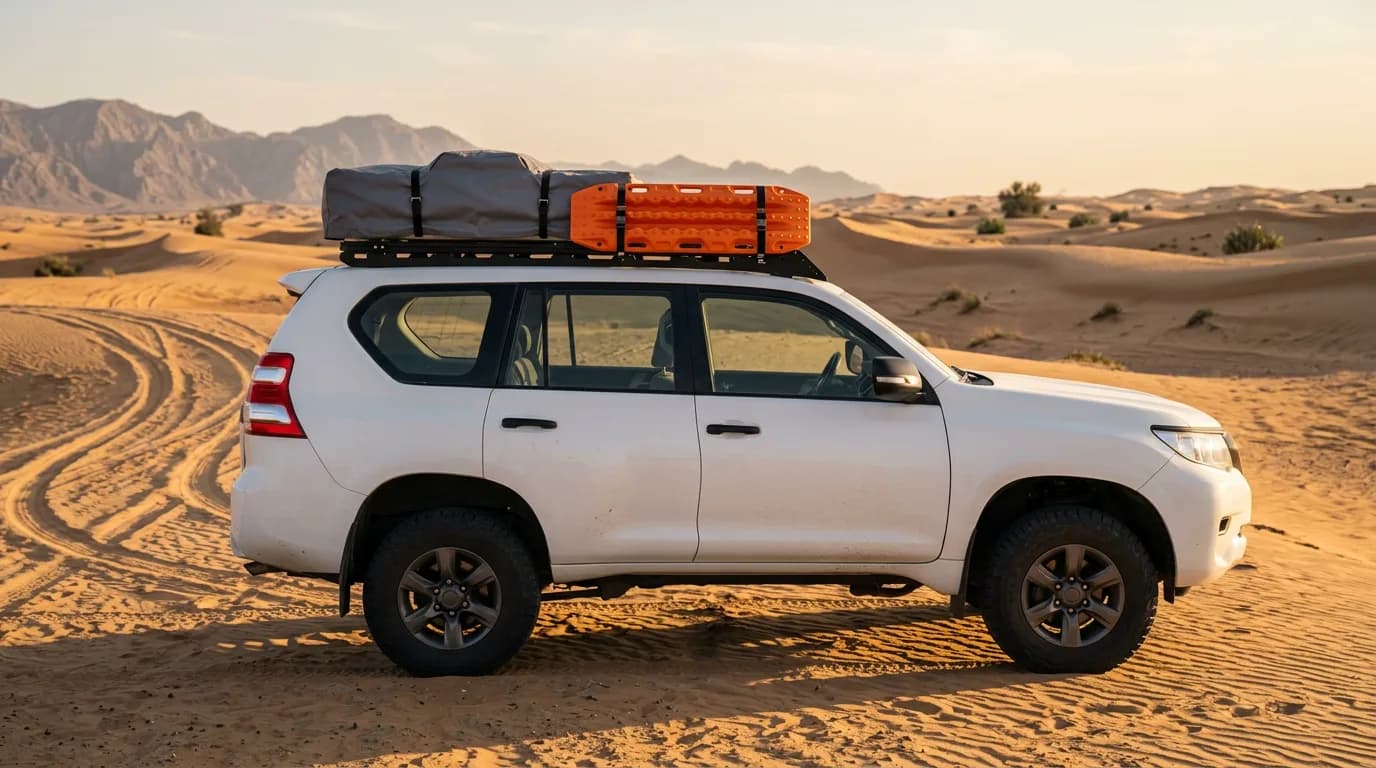
- Platform (flat) racks cover most of the roof with a slatted deck. They spread the load, offer tie-down points everywhere and suit roof tents and recovery gear.
- Baskets add a raised rim that keeps bags and gear from sliding.
- Roof boxes keep luggage dry, dust-free and locked, and are quieter than an open load.
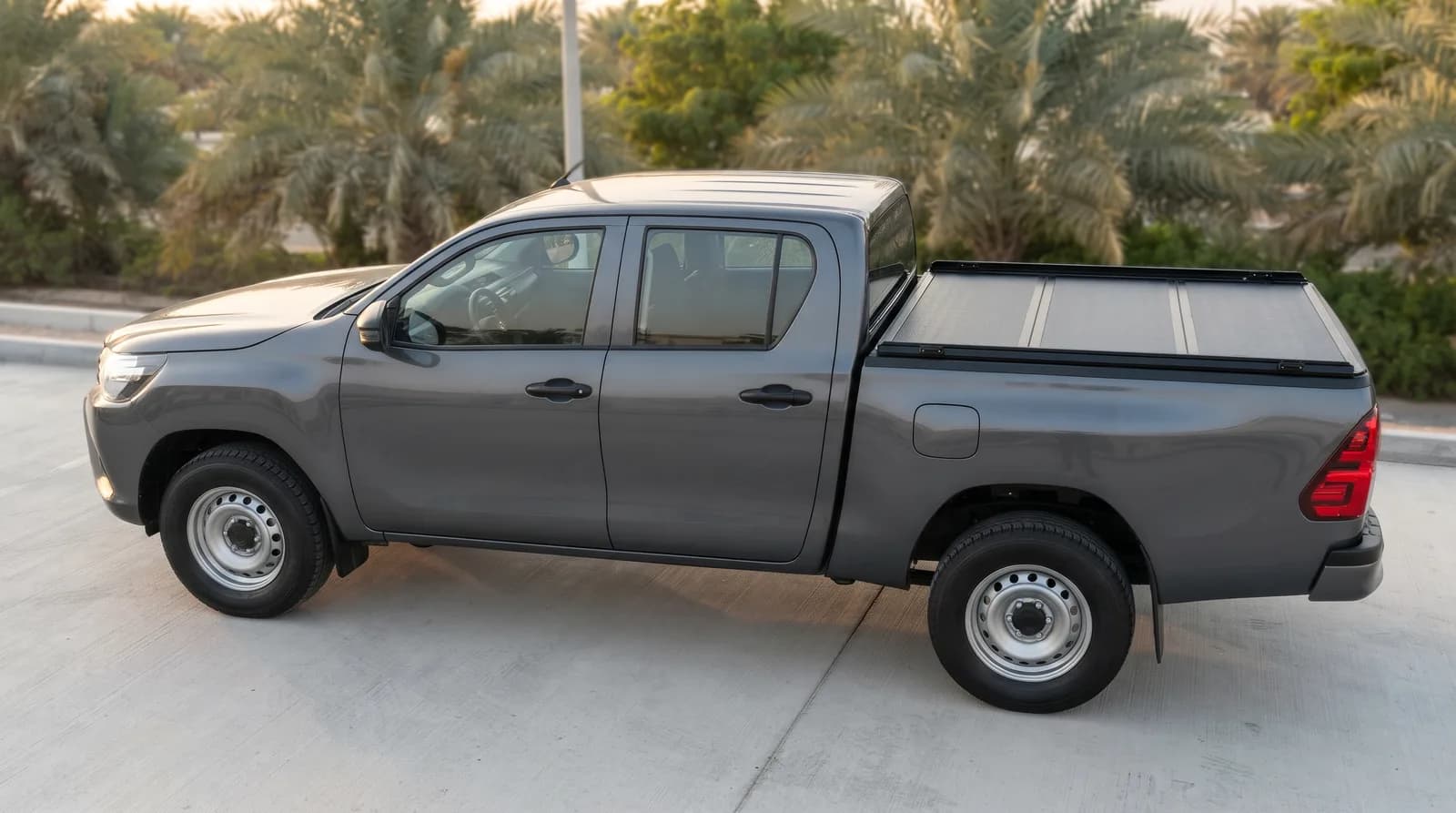
Examples in our catalogue include Patrol Y62 roof rails with cross bars, a Land Cruiser LC300 roof rack, Hilux Revo roof rack rails and a Defender 110 roof rack frame. See every model in Racks & Carriers.
The two limits that matter
Two weight figures decide what you can put on the roof. The lower of the two always wins.
- The vehicle's roof load limit. The car maker sets how much the roof itself may carry while driving. The UAE Ministry of Interior has said the same thing: the permitted load for a vehicle is set by its manufacturer. The figure varies widely from one vehicle to another, so find yours in the owner's manual. Never assume it.
- The rack's own rating. The rack or bars carry their own maximum, stated by the maker.
Two details catch people out:
- The rack's weight counts. A heavy steel platform can use a large part of the roof's allowance before you load anything.
- Static and dynamic limits differ. The dynamic limit applies while driving: braking, bumps and corners multiply the forces. The static limit applies when parked, and it is often higher, which is why a roof tent can hold people overnight. The figure that applies on the road is the dynamic one.
The UAE rule: 60 cm high
The Ministry of Interior's summer safety campaigns state that the height of any load mounted on a vehicle must not exceed 60 cm. Police have explained the reason simply: a taller load makes the vehicle unstable. The campaigns warn holiday drivers in particular not to stack suitcases above that line.
Dubai Police's fine table lists an overloaded or protruding load on a light vehicle without permission at AED 500 and four black points, and dropping or spilling a load at AED 500, as published by Khaleej Times (updated October 2024). Older lists in circulation show lower figures, so check the Ministry of Interior app or your emirate's police if in doubt. Better still, load so the question never arises.
How to load it
- Heavy and low first. Put the heaviest items inside the car and the light, bulky ones on the roof. On the rack, keep the weight centred between the bars and balanced left to right.
- Use proper straps. Cam buckle or ratchet straps through the rack, not bungee cords, which stretch and let a load shift.
- Cover or net loose items. Anything that can catch the wind eventually will.
- Check it after the first few kilometres. Loads settle and straps loosen. Check again at every fuel stop.
- Keep the load in its lane. Nothing should hang over the windscreen, the sides or the back.
How the car changes
A roof load raises the centre of gravity, so the car leans more in corners, takes longer to stop and is pushed around more by crosswinds. Drive slower than usual, especially on motorways and in gusty weather. Expect more wind noise and higher fuel consumption.
Off-road, a top-heavy car is more likely to roll on a dune or a side slope. Keep the roof as light as possible for desert driving; our desert driving guide covers the rest of the preparation.
Remember the new height, too. Underground car parks, home garages and drive-through car washes all have height limits. A note on the dashboard with the car's loaded height saves an expensive mistake.
Fitting and care
- Buy the rack made for your model, year and roof type: factory rails, fixed points or a bare roof each need different feet or clamps.
- Tighten the clamps to the maker's figures, and check them again after the first trip and every few weeks after that.
- Take cross bars off when you do not need them for a while. They cost fuel and add noise even when empty.
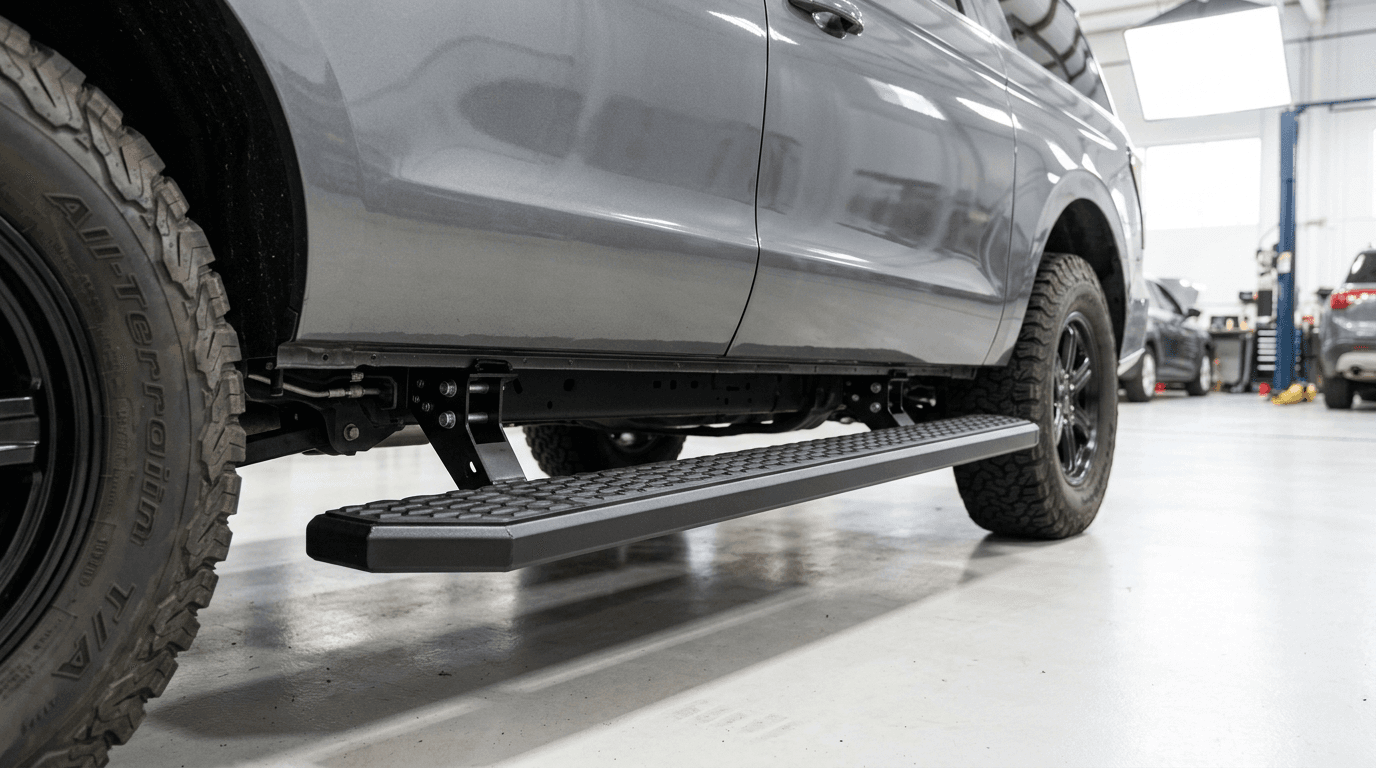
- A side ladder makes a tall SUV's roof much easier and safer to reach.
If your model is not listed, or you are not sure which rack fits your roof, send us your VIN and a photo of the roof through a part request.
Sources
- Gulf News — UAE motorists warned not to stack excess luggage on car roofs (July 2019; Ministry of Interior and Federal Traffic Council campaign: 60 cm height limit, permitted load set by the manufacturer).
- Emirates 24|7 — UAE warns drivers: roof load height must not exceed 60 cm (July 2026).
- Khaleej Times — Dubai traffic fines and black points: complete list (updated October 2024; Dubai Police table: protruding or dangerous loads on light vehicles).
PartMate sells parts and accessories. This guide is general advice: your vehicle's manual and the rack maker's instructions decide what your car can carry. Fines can change; check the Ministry of Interior for current figures.
Not sure what fits your car?
Send us your make, model and year — we check fitment before you pay, and we would far rather answer a question than process a return.