
Modifying Your Car Legally in the UAE: Tint Limits, Approvals, and What the Inspection Will Accept
By the PartMate team · 14 September 2026
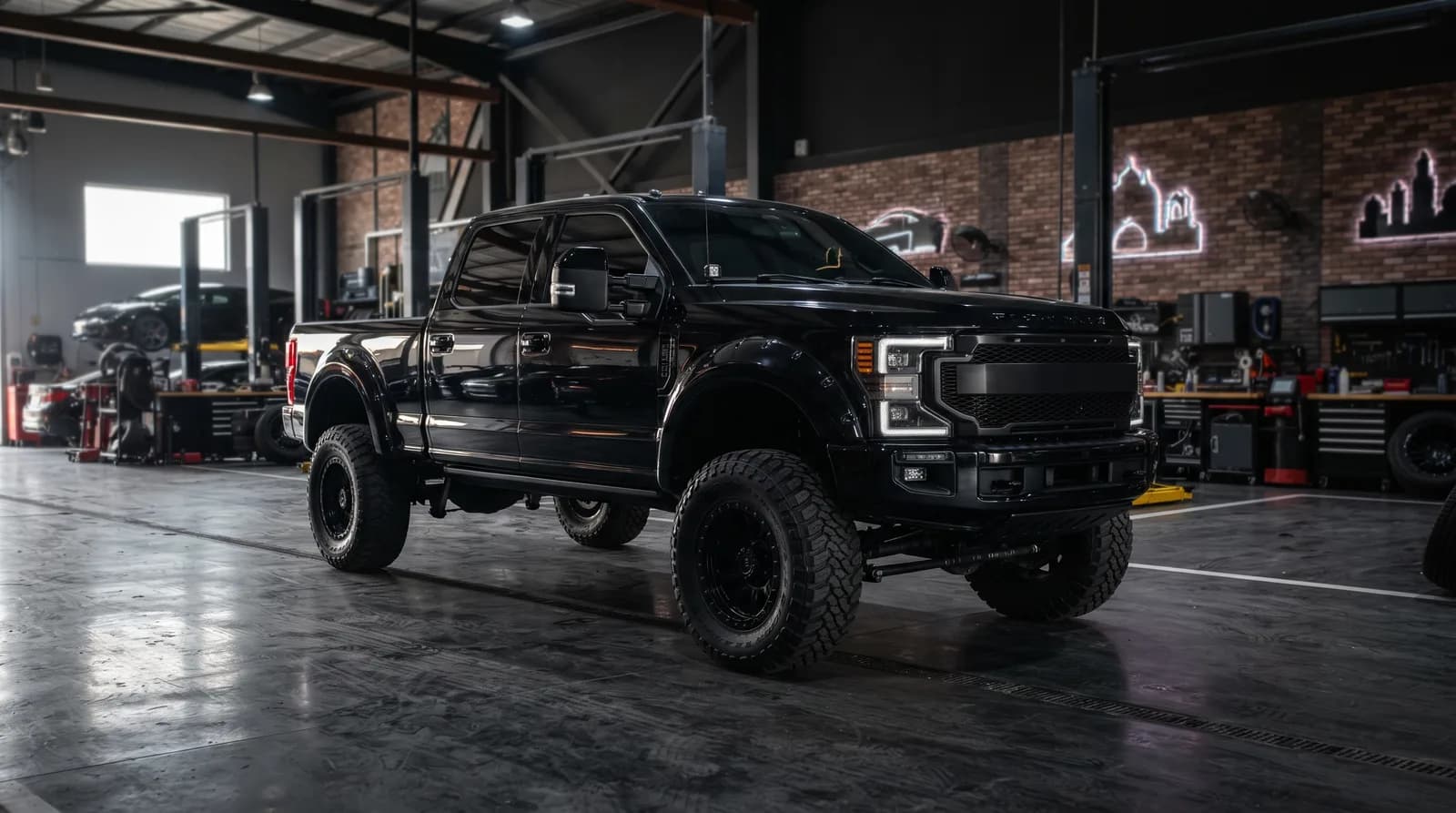
Most of what PartMate sells changes how a vehicle looks or performs, so this is the guide we get asked for most: what can be fitted without a visit to the licensing authority, what needs approval first, and where the inspection lane and the traffic law draw their lines. The short version is that appearance is largely yours, structure and engine are the authority’s, and tint has a number.
Last checked against the official pages on 14 September 2026. Rules and fines change; the linked page always wins over this article, and the emirate where the car is registered has the final say.
Window tint: the 50% rule
The current limit dates from the amended executive regulations of the federal traffic law that took effect on 1 July 2017 (Ministerial Resolutions 177 and 178 of 2017). As the Emirates News Agency reported the change, the amendment allows tinting of car window glass by 50 percent, with the exception of the front windscreen. In practice:
- Side and rear windows: film that blocks up to 50% of light.
- Front windscreen: no tint film.
- Buses and commercial vehicles follow their own, stricter figures set by the emirate’s transport authority.
Going beyond it is a traffic violation in its own right — Dubai Police’s schedule lists exceeding the permissible tint with an impound, and a release fee of AED 10,000 for the impounded vehicle — and the inspection lane checks glass condition and field of vision as standard. Our own PartMate Tint is supplied to tint shops in rolls; the installer chooses a shade that keeps the car inside the limit, which is exactly what a 50% film is for.
What needs the authority’s approval
The federal portal states the principle plainly: vehicles may not be modified in terms of structure, engine or colour without prior approval from the licensing authority. That splits the aftermarket into three groups.
1. Structure and engine — approval first
Engine swaps and forced induction, chassis and suspension changes that alter the vehicle’s geometry (a lift kit above what the manufacturer offers, for instance), changes to the number of seats or the body type, and anything that changes the weight or the axle loads. These go through the emirate’s licensing authority before they go on the road. The RTA’s vehicle-licensing services handle the request in Dubai; the vehicle is inspected against the approved technical standards and the change is recorded on the registration. The federal conformity body has published a regulatory system for modified vehicles, which is what the licensing authorities test against.
2. Colour — a police permit, then the registration
Repainting or wrapping a licensed vehicle in a different colour is a change to its registered description. In Dubai the RTA describes the route: apply in person or through the Dubai Police app for a permit from the General Department of Criminal Investigation, then have the new colour recorded on the ownership. A partial wrap that leaves the registered colour dominant is treated differently from a full change; ask before you book the wrap.
3. Appearance and bolt-on accessories — fit them, keep them road-legal
Grilles, bumpers, body kits, fender flares, running boards, side steps, roof racks, mirror caps, tail-light and headlight assemblies, floor mats, interior trim: none of these change the structure, engine or colour, and none need a permit. They do have to pass the lane and the law:
- Lighting must be white or amber to the front, red to the rear, with the correct beam pattern — the inspection checks that the lighting system is “homogeneous and working properly”. A road-legal aftermarket headlight is built to a recognised standard (our headlight guide explains DOT, SAE and FMVSS 108) and carries the marks; a bare LED bar in the grille that dazzles oncoming traffic is a violation whatever it is bolted to.
- Bumpers and body kits must be securely fitted with no sharp or protruding edges. A bull bar that hides the plate or the lamps fails on that alone.
- Running boards and side steps may not extend beyond the body line in a way that changes the vehicle’s width.
- Wheels and tyres: size within the manufacturer’s range, no rubbing, and every tyre under five years old (see our inspection guide).
Sound and exhaust
An exhaust louder than the original is not a cosmetic change in the eyes of the law; noise is a listed violation and modified exhausts are what most “modification” fines are actually issued for. Keep the catalytic converter and the silencer; the emissions test and the noise both depend on them.
Insurance sees all of it
Whatever the registration says, your insurer covers the vehicle it was told about. Declare the modifications at purchase and at renewal, keep the invoices, and keep the parts road-legal; an undeclared lift kit is the classic reason a claim is disputed. See our insurance guide.
A working checklist before you buy a part
- Does it change structure, engine or colour? Then approval comes first, not after.
- Is it lighting? Then it needs a recognised certification and the right beam and colour.
- Is it tint? Then 50% on the sides and rear, nothing on the windscreen.
- Will the lane see it? Sharp edges, hidden plates, blocked lamps, wider than the body — fix the fitment, not the inspector.
- Have you told the insurer?
Sources
- Emirates News Agency (WAM) — Implementation of executive regulations concerning Federal Traffic Law begins today: the 1 July 2017 amendment, 50% tint with the windscreen excepted, Ministerial Resolutions 177 and 178 of 2017.
- UAE Government portal (u.ae) — Registering vehicles: no modification of structure, engine or colour without the licensing authority’s approval.
- UAE Government portal (u.ae) — UAE traffic law: the fines and black-points schedule.
- Dubai Police — Traffic fines and impound release fees.
- RTA Dubai — Vehicle licensing service details (colour change permit, technical inspection for modifications) and RTA FAQs.
- Emirates News Agency (WAM) — New regulatory system for modification of vehicles.
PartMate stocks appearance and bolt-on parts for American and Japanese trucks and SUVs. Where a part is certified we say so on its page; where the fitment is a question for your emirate’s licensing authority, we say that too. This article summarises public information and is not legal advice.
Not sure what fits your car?
Send us your make, model and year — we check fitment before you pay, and we would far rather answer a question than process a return.