Rainy Season in the UAE: Driving in Rain, Flooded Roads and Wadis — and the Fines
By the PartMate team4 min read
In this article
Rain is rare in the UAE, and that is exactly what makes it dangerous. Roads, drains and drivers are not used to it, a storm can drop a lot of water in a short time, and wadis that are dry for months can fill and flow within minutes. The rainy days usually come in the cooler months, so now is the time to get the car and the habits ready.
Last checked on 31 October 2026. Fines and temporary speed limits are set by the Ministry of Interior and the police. Electronic signs on the road always take priority.
Before the first storm
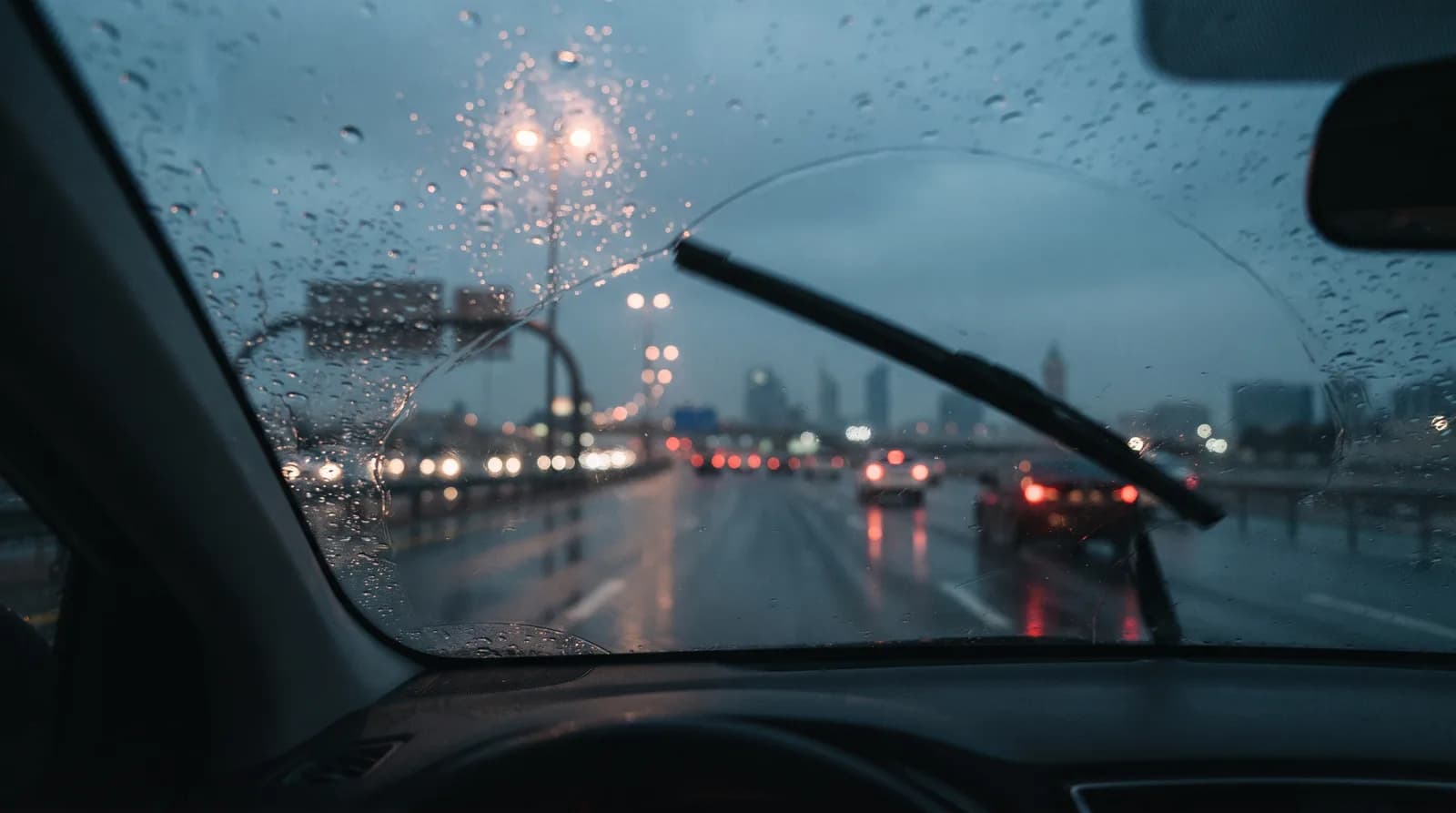
- Wiper blades. Months of sun bake the rubber. If a blade streaks, judders or leaves gaps, replace it before you need it.
- Washer fluid. Top it up: the first rain turns dust on the glass into mud.
- Tyres. Worn tread cannot clear water from under the tyre. Check the depth, the pressure and the tyres' age; our summer car care guide covers the five-year rule.
- Lights. Every bulb should work, including the fog lights and the brake lights.
- Demister. Make sure the air conditioning and the rear demister actually clear the glass.
Why the first rain is the worst
Between showers, oil, rubber and dust build up on the road surface. The first rain lifts that film and turns it into a slippery layer, before there is enough water to wash it away. So:
- Slow down, and leave at least twice the usual gap to the car ahead.
- Brake, steer and accelerate gently. Sudden inputs are what break traction.
- Do not use cruise control on a wet road.
Aquaplaning
At speed, a tyre can ride up on a film of water and lose contact with the road. The steering suddenly feels light and the car stops responding. If it happens:
- Ease off the accelerator.
- Do not brake hard and do not jerk the wheel.
- Hold the steering straight until the tyres grip again.
Lower speed and good tread are what prevent it.
Seeing and being seen
- Use dipped headlights in rain, even by day.
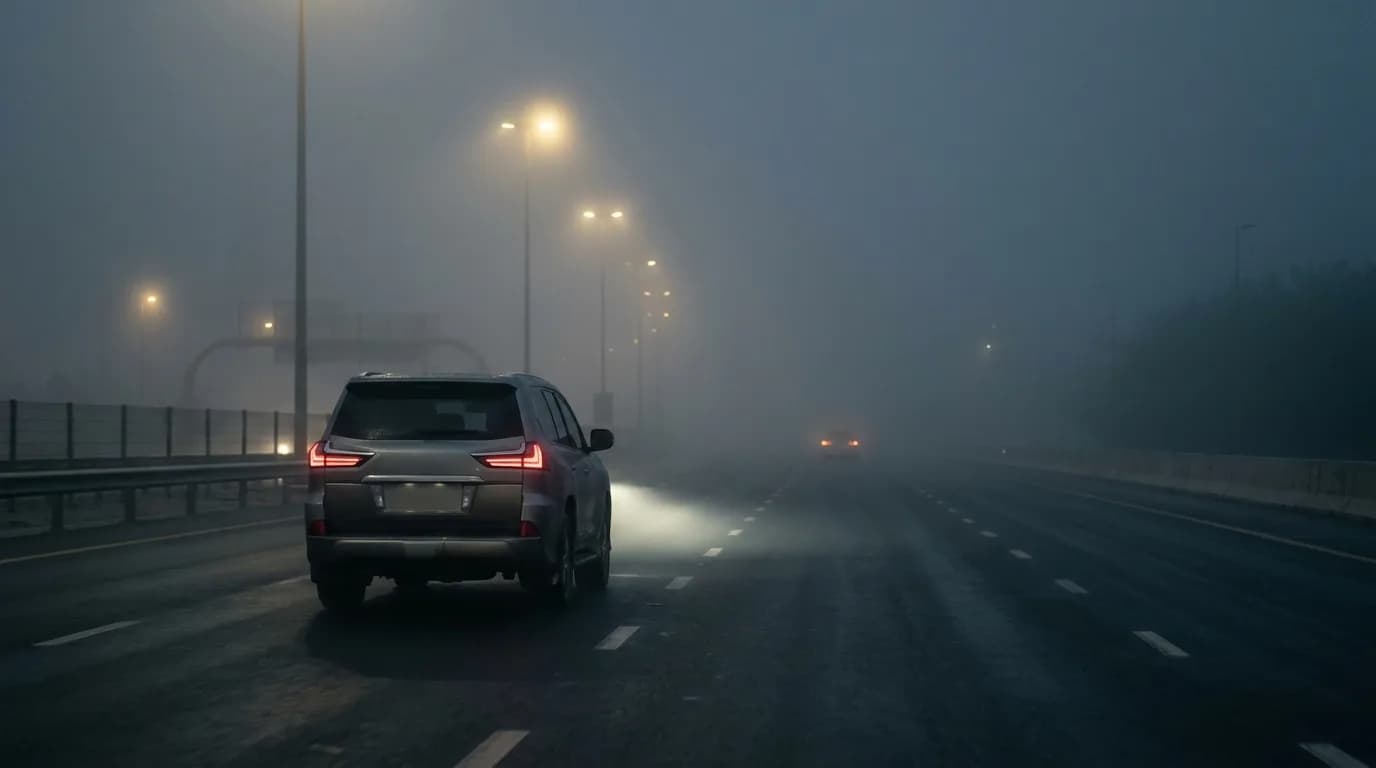
- Use fog lights only in heavy rain with poor visibility, and switch them off afterwards. Our fog guide explains why.
- Do not drive with your hazard lights on. It confuses other drivers and hides your indicators, and it carries a fine of AED 500 and four black points. Use hazards only when you have stopped safely off the road.
- Signal every lane change, and earlier than usual.
Standing water: do not test it
You cannot see how deep water is, or whether the road underneath has been washed away. Underpasses and low roads flood first. The US National Weather Service puts the risk plainly: 12 inches (about 30 cm) of rushing water can carry away most cars, and 2 feet (about 60 cm) can carry away SUVs and trucks. It is never safe to drive into flood water.
Four-wheel drive does not change this: it helps on sand, not against water that lifts the car.
- If the road ahead is flooded, turn around and take another route.
- If you have driven through shallow water by mistake, press the brake lightly a few times afterwards to dry the brakes.
- If the engine stalls in water, do not try to restart it. Water drawn into the engine can wreck it. Call for recovery instead.
- Whether flood damage is covered depends on your policy. Our car insurance guide explains the difference between the main types.
Wadis and flood channels: the fines
The Ministry of Interior treats entering a flowing valley as a serious offence, however safe it looks. As reported by Gulf News in March 2026:
- Entering valleys or waterlogged areas while water is flowing: AED 2,000, 23 black points and 60 days' vehicle impoundment (Ministerial Resolution No. 227 of 2023).
- Gathering or stopping near valleys, dams and flood channels during rain, including to watch or film the water: AED 1,000 and six black points.
- Obstructing police, ambulance or rescue teams during storms or floods: AED 1,000, four black points and 60 days' impoundment.
- Using a phone to take photos while driving: AED 800 and four black points.
Temporary speed limits shown on electronic signs during bad weather replace the fixed limits, and exceeding them is fined like any other speeding offence.
Thunderstorms
Stay away from open, high ground during lightning. If visibility drops so far that you cannot see the road, pull over somewhere safe, completely off the road. Switch on your hazard lights and wait for the worst to pass.
After the rain
- Dry the cabin quickly. Wet carpets in a hot car grow mould fast. Waterproof floor liners, such as these all-weather mats for the Jetour T2, keep water and mud off the carpet in the first place.
- Check the lights. Water inside a headlight or tail light lens means a seal has failed. Have it checked before the next storm.
- Rinse the underbody if you drove through mud or standing water.
In an emergency
Call 999 for police and 998 for an ambulance. Follow updates from the police, the Ministry of Interior and the National Centre of Meteorology. Share your live location with someone if you are stuck.
Sources
- Gulf News — UAE drivers warned: up to Dh2,000 fine and 23 black points for entering flood valleys (March 2026; Ministry of Interior and Abu Dhabi Police).
- Gulf News — Rain in the UAE: weather-related traffic fines every motorist must know (updated March 2026; Ministerial Resolution No. 227 of 2023).
- US National Weather Service — Turn Around Don't Drown (water depths that move vehicles).
PartMate sells parts and accessories. This article summarises published official guidance for convenience; it is not legal advice. Follow the police and the electronic road signs of the emirate you are in.
Not sure what fits your car?
Send us your make, model and year — we check fitment before you pay, and we would far rather answer a question than process a return.