Front Bumper and Grille Upgrades: Sensors, Radar, Cameras and Airbags
By the PartMate team9 min read
In this article
A new grille or a steel front bumper changes a car's face more than any other upgrade. On a recent SUV or pickup, though, the front end is no longer just plastic and chrome. Behind it sit the radar for adaptive cruise and automatic braking, a camera, parking sensors and the crash sensors that tell the airbags when to fire. Choose badly and you can lose features you paid for, or change how the car behaves in a crash.
What lives behind your grille and bumper
- Radar. It drives adaptive cruise control and pre-collision braking. It usually sits behind the grille emblem or low in the bumper.
- Front camera. It is often in the grille, for 360-degree or off-road views.
- Parking sensors. The small round discs in the bumper.
- Airbag crash sensors. Front impact sensors on the front structure, which help the airbag system judge how hard the car has hit something.
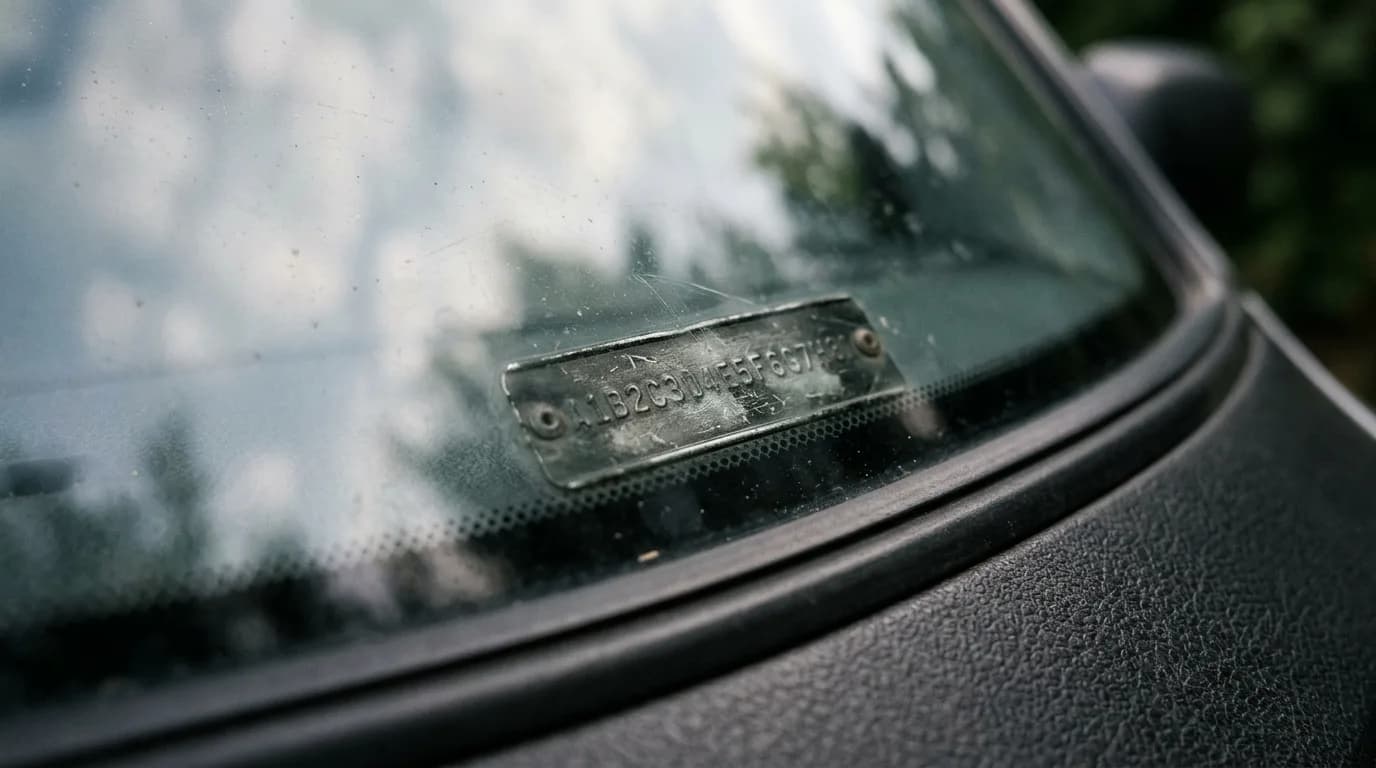
The same model is often sold with and without them, depending on trim and year. Our guide to checking fitment by VIN shows how to confirm your exact specification.
Radar: why the emblem is not just a badge
The emblem in front of a radar is a special part: it has to look metallic while letting millimetre-wave radar pass through. Toyota-group supplier Toyoda Gosei makes "millimeter wave radar compatible emblems" for exactly that reason. Paint matters too: paint makers PPG and BASF have both found that the aluminium flakes in some metallic finishes reduce radar transmission. Most colours are fine; a few are not.
Toyota's position on aftermarket front ends is blunt. In a 2019 dealer campaign letter for its pickups, it listed modifications on which it would not perform a radar-related remedy:
- aftermarket grilles;
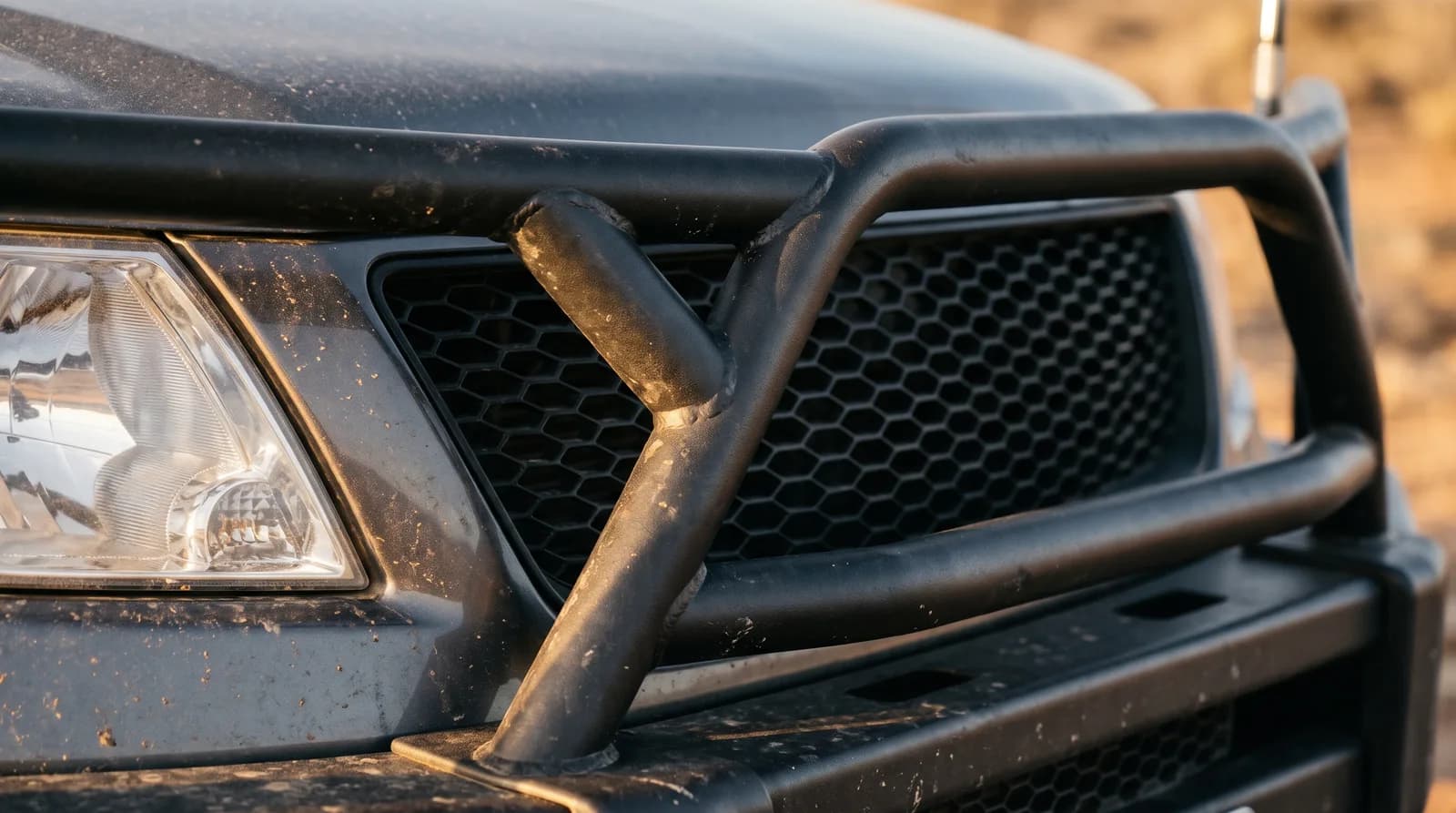
- grille guards;
- winches;
- light bars;
- aftermarket steel bumpers.
It warned owners that on modified vehicles the pre-collision system and radar cruise control "may not operate as designed". The system may brake when no collision is likely, or fail to recognise a vehicle or pedestrian.
So, if your car has radar in the grille:
- Buy a grille made for your exact model and specification, with provision for the radar.
- Move the original radar-transparent emblem or cover across if the new grille is designed to take it.
- Never put a painted, chrome or solid panel in front of the radar.
Calibration is part of the job
A bumper or grille swap can knock the radar or camera out of alignment even when the new part fits perfectly. The repair-training body I-CAR notes that calibration may be required after the front bumper or grille is removed, not only when a sensor is replaced. For the 2024 Land Cruiser, its calibration database lists "if front bumper cover/grille is replaced" as a trigger for the radar. UK insurers' research body Thatcham goes further: any repair to parts near ADAS sensors should be followed by calibration.
Ask your fitter whether they can calibrate your model, or plan a dealer visit afterwards, and keep the calibration report. Procedures can differ between GCC-specification and other cars, so the dealer's procedure for your VIN is the one that counts.
Cameras and parking sensors
Parking sensors need the right holes, in the right place, with the right brackets. Certification body CAPA has flagged aftermarket bumpers whose sensor brackets differed from the original design and might not perform the same way.
Paint is the other trap. Toyota's owner's manual says simply: do not modify, disassemble or paint the sensors. GM warns that excess paint build-up will stop a sensor working.
With bull bars, the camera often has to move. Aftermarket maker ARB sells camera relocation kits for its bars, and states that some of its bars do not fit vehicles with front parking sensors. If a product listing does not mention your sensors or camera, ask before you buy.
Airbags: the part nobody sees
A car's airbag system is tuned to how its front end crushes in a collision. Car makers even build in sacrificial crush zones, so that a minor knock is not read as a major crash.
ARB, which builds bull bars, explains the risk plainly. A rigid structure that does not crush like the original front end "may change the deployment timing of the air bag". An airbag that fires late can be as dangerous as one that does not fire.
Car makers say the same in their manuals:
- Kia: installing bumper guards or non-genuine bumpers may adversely affect collision and airbag deployment performance.
- Nissan: unauthorised changes to the front end structure could affect proper operation of the airbags.
In Victoria, Australia, a vehicle with airbags may only take a bar certified by the vehicle maker, designed for that model, or shown not to affect airbag deployment. The bar's mounting points must stay clear of any airbag sensors.
Research suggests a well-designed bar can have very little effect. The point is that the design decides it, so:
- Buy a bar designed for your model and stated to be airbag-compatible.
- Fit it only at the original mounting points.
- Never weld or improvise brackets.
Pedestrians and the rules
A steel bar also changes what happens to a pedestrian. Victoria's regulator states that laboratory testing shows most types of bull bar increase the likelihood of serious injury and death for pedestrians and other vulnerable road users. That is why the UK has banned the sale of bull bars without safety approval since 2007, and why the EU type-approves them.
In the UAE, modified vehicles fall under a federal technical regulation. When the first code came into force in 2017, The National reported that it covered bull bars and required owners of modified cars to get a modification certificate. The regulation has been revised since, so check the current requirements with your licensing authority.
Dubai's RTA said in July 2026 that it does not issue permits for alterations that change a vehicle's original factory specifications, and urged owners to consult it before modifying. Dubai Police fine illegal modifications to an engine or chassis AED 1,000, with 12 black points and 30 days' impoundment. Whether a given bumper counts is for the authority to say, so ask first.
One more rule: if a winch bumper means moving the front number plate, do it the approved way. The 2024 traffic law punishes installing a plate in violation of the law with imprisonment, a fine of at least AED 20,000, or both. Our guide to legal modifications has more on approvals.
Weight: the front axle notices
A steel bumper is heavy. ARB lists its Land Cruiser 200 bar at 89 kg, and a 12,000 lb winch adds about 34 to 47 kg. That is more than 100 kg hung ahead of the front wheels, minus whatever the factory bumper weighed.
The front axle's rated load must not be exceeded when the car is fully loaded. That is why suspension makers sell uprated front springs specifically for vehicles with a bull bar and winch.
Remember the link back to the radar: Toyota notes that its radar is adjusted for the vehicle's original suspension. A lift or new springs can mean another calibration.
Choosing between styling and protection
Most buyers want one of two things:
- A new look. An OE-style or facelift bumper or grille in ABS plastic keeps the factory crush behaviour and is the simpler choice on sensor-heavy cars. Examples are our Land Cruiser 200 front bumper, the Patrol Y62 front bumper restyling kit, a Land Cruiser LC300 LED front grille and a Patrol Y62 sport-style grille.
- Protection off-road. A steel bar or guard built for your model, such as the Hilux Revo steel grille guard or the Jetour T2 front bumper guard.
Browse Bumpers, Grilles and Bumper Guards. Send us your VIN through a part request and we will tell you whether a part has provision for your radar, camera and sensors before you order.
Checklist before you buy
- Know which sensors your car has: radar, camera, parking sensors.
- Choose a part made for your model and year, with provision for each of them.
- Nothing metallic or solid in front of the radar.
- Steel bars: model-specific, airbag-compatible, original mounting points.
- Budget for calibration, and keep the report.
- Check the extra weight against your front axle rating.
- Ask the licensing authority before a modification that changes the factory specification.
Last checked on 5 November 2026.
Sources
- Toyota, via NHTSA — Special Service Campaign K0B dealer letter (May 2019; modifications on which the radar remedy cannot be performed), notice on aftermarket parts (April 2019) and owner acknowledgment (2020).
- Toyoda Gosei — Millimetre wave radar compatible emblems (April 2023).
- I-CAR — BASF on paint and radar (October 2024), calibration requirements for forward radar, 2024 Land Cruiser calibration triggers and GM on painting parking sensors.
- Autobody News — Certain metallic finishes may interfere with ADAS radar (PPG, 2022).
- Thatcham Research — ADAS repair position (May 2019).
- CAPA / Intertek — Public safety notice on ADAS sensor brackets (May 2019).
- ARB — Air bag compatibility, camera relocation kit, Land Cruiser 200 bar weight, winch weights (steel cable, synthetic rope) and uprated springs for a bar and winch (manufacturer information).
- Kia — Owner's manual: airbag precautions; Nissan — Owner's manual: supplemental air bag systems (2024).
- Department of Transport and Planning, Victoria — Vehicle Standards Information 1: Bull bars (October 2021; airbags, pedestrians, axle load).
- UK Department for Transport — Bull bars (2010); Regulation (EU) 2019/2144 — Article 8, frontal protection systems.
- Bullen and Thambiratnam — Bull-bar effects on vehicle crash characteristics (ESV conference, 1996).
- The National — New UAE car modification rules come into force (August 2017) and Dubai Police fines for illegal modifications (21 October 2026).
- Gulf News — RTA: no permits for changes to factory specifications (July 2026) and New traffic law: number plate offences (December 2024).
PartMate sells car parts and accessories. This guide is general advice, not a legal or engineering opinion: your vehicle maker's instructions, the part maker's fitting instructions and the licensing authority decide what is safe and permitted on your car. Have safety systems calibrated by a qualified workshop after any work near them.
Not sure what fits your car?
Send us your make, model and year — we check fitment before you pay, and we would far rather answer a question than process a return.