
Car Insurance in the UAE: Third-Party vs Comprehensive, What the Law Requires, and What the Policy Actually Pays
By the PartMate team · 14 September 2026
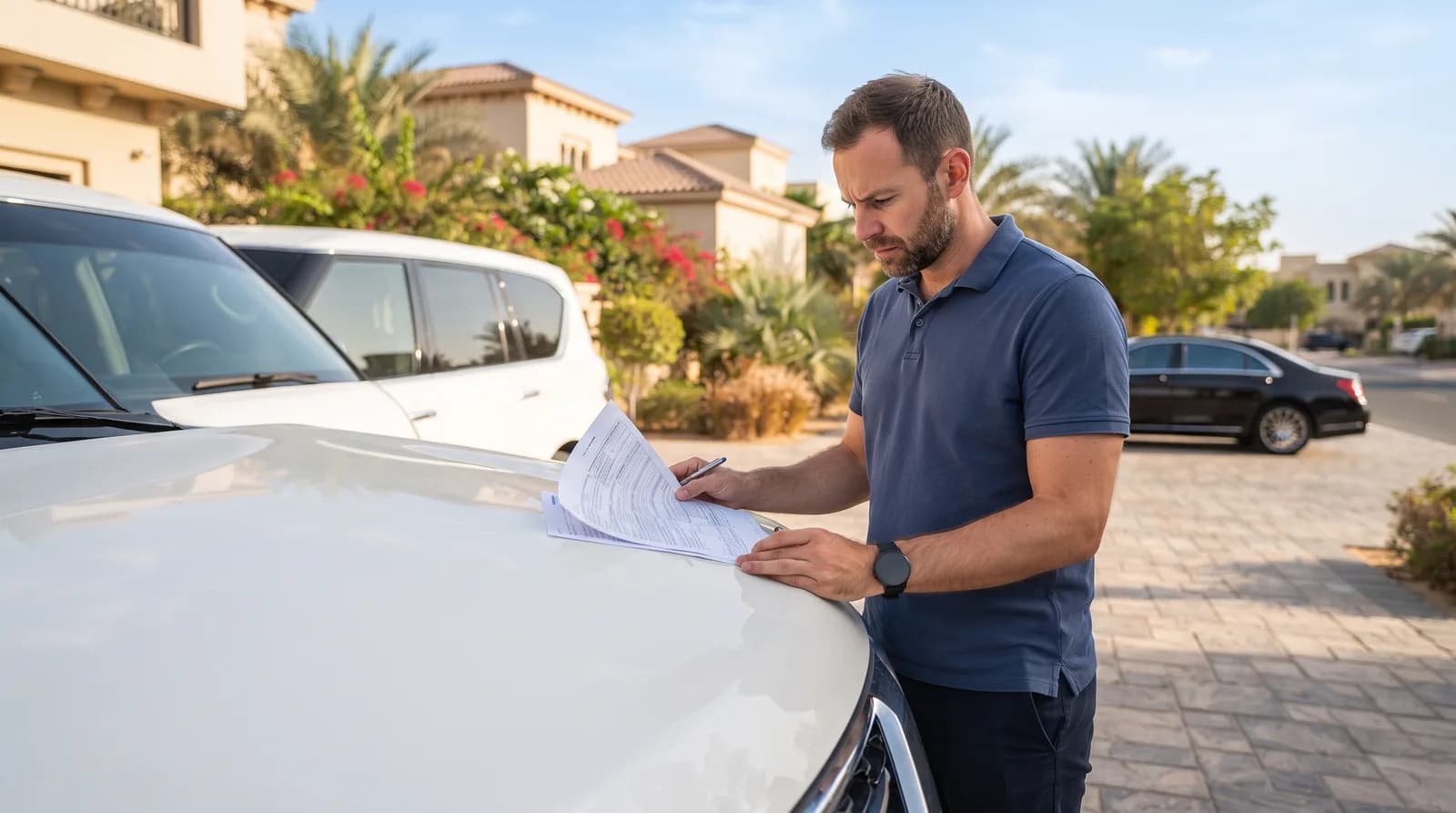
Motor insurance in the UAE is unusually standardised. Every insurer issues the same two policy wordings, set by regulation and published by the Central Bank, so the differences between quotes are in price, add-ons and service — not in what the base cover says. That makes the base worth understanding once. This guide reads the unified policies and explains what they mean for an ordinary owner.
Last checked against the official texts on 14 September 2026. The policy wording linked below is the authority; this is a plain-language summary, not legal advice.
The two policies every insurer must use
The Regulation of Unified Motor Vehicle Insurance Policies (Insurance Authority Board Decision No. 25 of 2016, now administered by the Central Bank) sets two standard forms:
- The Unified Motor Vehicle Insurance Policy Against Third Party Liability — the minimum the law requires to register a vehicle. It pays other people for what your car does to them.
- The Unified Motor Vehicle Insurance Policy Against Loss and Damage — what the market calls comprehensive. It adds cover for your own vehicle, and is always sold together with third-party liability.
Both took effect on 1 January 2017 and have been amended since; the Central Bank rulebook carries the consolidated text.
Third-party liability: what it covers
The policy covers the amounts the insured or the driver must pay for bodily injury to a third party, inside or outside the vehicle, and property damage to a third party, arising from the use or parking of the vehicle in the UAE during the insurance period. The insurer may not refuse an injured third party on the strength of an argument it could only raise against you — the injured party claims from the insurer directly.
The limits, as the policy text sets them:
- Death or bodily injury to any person, including your passengers: the amount judicially awarded, without any limit whatsoever. Two exclusions matter: you and the driver of the vehicle that caused the accident are not third parties, and neither are passengers who are your employees injured in the course of their work.
- Death of a spouse, parent or child of the insured or driver: limited to AED 200,000 per person, adjusted by the percentage of disability in case of injury, plus medical treatment.
- Property damage (other than property owned by or in the custody of the insured or driver): AED 2,000,000 per accident, regardless of how many people’s property was damaged, inclusive of the cost of moving the damaged vehicle to a repair shop.
The policy also spells out how the other party’s car is put right: if it is in its first year of registration, repairs are at the agency; after that, at suitable workshops for the type and age of the car, with warranted work and the right to have the repair checked at an approved inspection agency. If the damage exceeds 50% of the vehicle’s market value, the insurer pays market value or replaces the vehicle. A private owner is also entitled to a substitute-vehicle allowance while theirs is off the road.
Comprehensive: what it adds
The loss-and-damage policy covers your own vehicle against accident, fire, theft and similar perils on the terms in the policy, and is combined with the third-party cover above. Where the quotes genuinely differ is in the optional sections, so read them:
- Agency repair — repairs at the dealer rather than a general workshop, usually offered for the first years and priced accordingly.
- Personal accident for the driver and passengers — the base policy does not treat you or your driver as a third party; if you want the death benefit for yourselves, it is bought as a rider, and the regulation sets its minimum at AED 200,000.
- Natural disaster cover. The policy defines a natural disaster as a general phenomenon such as flooding or storm, declared as such by the concerned authority; whether it is included, excluded or an add-on is stated in the schedule. After the storms of recent years this is the section to read twice.
- Off-road use, Oman extension, roadside assistance, replacement car, windscreen and excess amounts — all schedule items, all worth comparing like for like.
Modifications and accessories: tell the insurer
A lift kit, a body kit, aftermarket lighting or a set of larger wheels changes the vehicle the insurer agreed to cover. Declare modifications at purchase and at renewal, keep the invoices, and check that the parts are of a kind the registration will accept — an undeclared modification is the classic ground for a disputed claim. Our modifications guide covers the registration side.
How the policy interacts with registration
The RTA verifies the validity of your insurance before it renews the vehicle ownership, and insurers upload policies electronically, so the policy has to be issued before you renew. Buy it first, then book the inspection, then renew — the order in our registration guide.
Reading a quote in five lines
- Which policy: third-party only, or loss and damage plus third-party?
- Repair type and years: agency or non-agency, and for how long?
- Excess: what you pay per claim, and whether it changes for young drivers.
- Riders: personal accident, natural disaster, off-road, Oman, roadside, replacement car.
- Declared facts: the modifications, the drivers, the use — wrong answers here are what void a policy.
Sources
- Central Bank of the UAE rulebook — The Unified Motor Vehicle Insurance Policy Against Third Party Liability: definitions, the limits quoted above, repair rules and the substitute-vehicle allowance.
- Central Bank of the UAE rulebook — The Unified Motor Vehicle Insurance Policy Against Loss and Damage.
- Central Bank of the UAE rulebook — Board Decision No. (25) of 2016 — Regulation of the Unified Motor Vehicle Insurance Policies.
- UAE Government portal (u.ae) — Insurance.
PartMate sells parts and accessories, not insurance. This article summarises public regulatory texts for convenience; your policy schedule and the insurer’s wording govern any claim.
Not sure what fits your car?
Send us your make, model and year — we check fitment before you pay, and we would far rather answer a question than process a return.