
Summer Car Care in the UAE: Tyres, Battery, Cooling and the Five-Year Rule
By the PartMate team · 14 September 2026
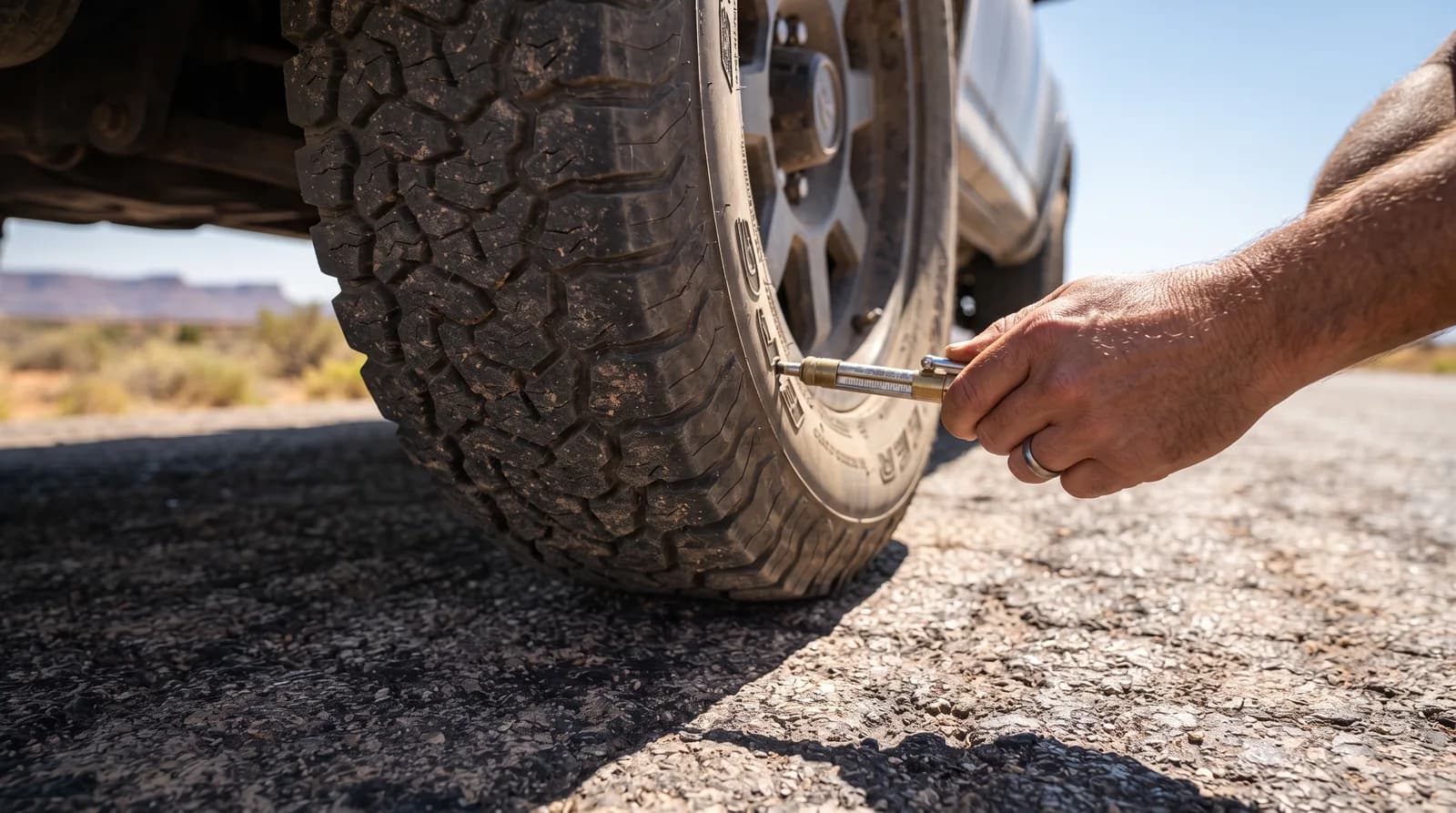
Summer here is a stress test that runs for four months. Road surfaces reach temperatures that soften rubber, engine bays sit at the edge of their cooling capacity in traffic, and batteries that were fine in March are dead in August. Most of the failures are predictable, and two of them — tyres and batteries — are the ones that leave people on the hard shoulder at 2pm. Here is what the rules say and what we check ourselves.
The rules quoted are from the RTA and MOIAT pages linked at the end, checked on 14 September 2026. The maintenance advice is PartMate’s own trade experience, not a regulation.
Tyres: the rule and the reality
The five-year rule
The RTA is explicit that a vehicle will not pass its technical inspection if the tyres’ lifespan has exceeded five years from the date of manufacture, or if they are seriously worn or cut. The Ministry of Industry and Advanced Technology, which regulates tyres as a product, likewise treats five years from manufacture as the maximum service life in its guidance for the inspection. Age matters more than tread in this climate: heat hardens and cracks rubber from the inside, and an old tyre with perfect tread is the one that fails at speed.
Read the date, not the tread
On the sidewall, the DOT code ends in four digits: the week and year of manufacture. 0523 is the fifth week of 2023. Check it on all four, and on the spare. When buying, check it before paying — a tyre that has sat two years in a warehouse has two fewer years of legal life.
Labels and specifications
Tyres sold in the UAE carry a product conformity label under MOIAT’s scheme, and the standard they are certified to includes a temperature-resistance grade for exactly this market. Buy from a dealer who shows the label, and match the load and speed index on the door-jamb placard: an under-rated tyre on a heavy SUV runs hot.
Pressure
Check pressures cold — first thing in the morning, before the sun and the driving warm them. Set them to the placard figure, not the maximum on the sidewall. Under-inflation is the summer killer: the sidewall flexes, heat builds, and the tyre lets go. Re-check monthly and before any long trip.
Battery: why August is the month
Heat, not cold, shortens a battery’s life: it accelerates the chemistry inside and evaporates the electrolyte. A battery that struggled to turn the engine over on a July morning will fail outright a few weeks later. Signs to act on: slow cranking, a dimming of the lights at idle, a swollen case, or a battery past three summers. Have it load-tested before the heat rather than after; most workshops and battery suppliers do it free. Keep the terminals clean and tight, and if the car stands for days, a small maintainer stops the drain.
Cooling system
The inspection standard requires an engine with no leak of fuel, lubricant or coolant — and in summer a small coolant leak becomes an overheated engine in one traffic jam. Before the season: coolant at the right level and the right mix (a 50/50 coolant-and-distilled-water mix, not tap water), hoses firm and without bulges, the radiator fins clear of sand and debris, the auxiliary fan running when the air-conditioning is on, and the belts uncracked. Watch the temperature gauge in stop-start traffic; if it climbs, turn the cabin heater on full — it is a second radiator — and pull over.
Cabin heat: tint, shades and the interior
A parked car in the sun gets hot enough to warp dashboards and split trim. Window film within the legal limit — up to 50% on side and rear glass, nothing on the windscreen (see our modifications guide) — cuts the heat load and the UV on the interior; a quality film like PartMate Tint is specified for infrared rejection as well as shade. A windscreen sunshade and cracking the windows in a shaded spot do the rest. Leather and dashboards last longer with a UV protectant; rubber floor mats cope with sand better than carpet in the heat.
Lights, wipers, air-conditioning
- Air-conditioning: a system that cools slowly in June is a system that will not cool at all in August; have the gas pressure and the cabin filter checked in spring.
- Wipers: rubber that baked all summer smears the first rain of winter. Replace the blades in autumn.
- Headlights: heat yellows old polycarbonate lenses and reduces output; a clouded lens is a lighting fail waiting for the inspection. Polish or replace.
The ten-minute monthly routine
- Tyre pressures, cold, to the placard — all four plus the spare.
- A look at every sidewall for cracks and bulges, and a glance at the DOT year.
- Coolant level in the expansion tank; a look under the car for drips.
- Battery terminals clean; note any slow cranking.
- All lights, the horn, the washers.
- Radiator fins clear of sand; nothing blocking the grille.
- Emergency kit: water, a torch, a reflective triangle, a charged phone bank.
Sources
- RTA Dubai — Field inspection of vehicle tyres in Dubai: tyres older than five years from manufacture fail the test; worn or cut tyres; unsuitable tyre types.
- RTA Dubai — Renew and Amend Vehicle Data Ownership (inspection standard: tyres, brakes, lighting, leaks).
- Ministry of Industry and Advanced Technology — Product label cards for vehicle tyres and Conformity certificates for regulated products.
- UAE Government portal (u.ae) — Road safety (summer campaigns on tyre integrity and maintenance).
PartMate sells parts and accessories for American and Japanese trucks and SUVs; the maintenance advice above is general and your vehicle’s handbook and a qualified workshop come first. This article is not legal advice.
Not sure what fits your car?
Send us your make, model and year — we check fitment before you pay, and we would far rather answer a question than process a return.