Desert Driving Season: How to Prepare Your 4x4 for the Dunes in the UAE
By the PartMate teamUpdated 4 min read
In this article
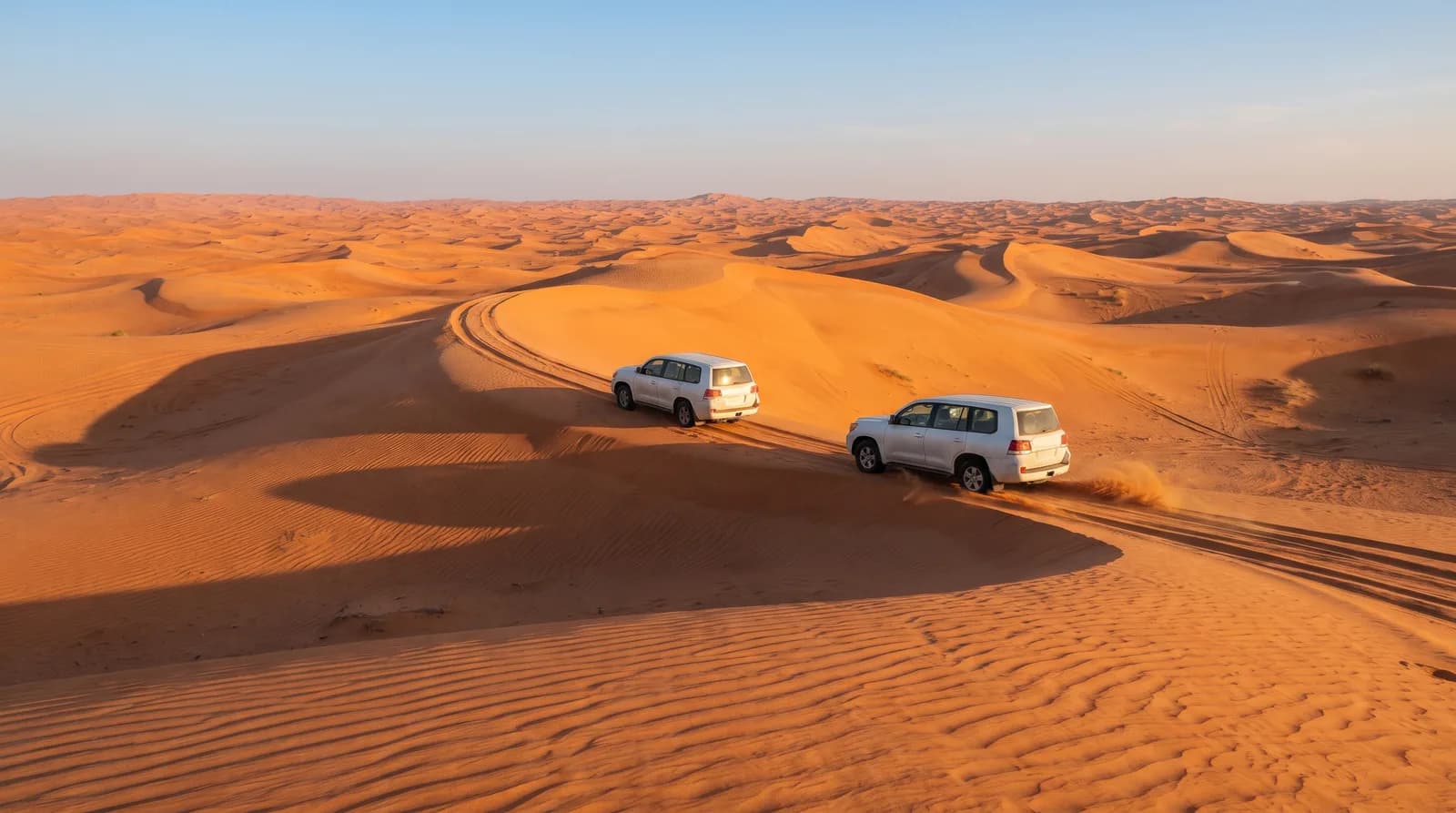
As the heat breaks, weekends move outdoors, and for many UAE drivers that means the dunes. Sand is forgiving at the right pressure and speed and brutal at the wrong ones, and a desert is a bad place to discover a missing shovel. Here is how to prepare the car, the kit and the trip, drawing on what UAE police tell desert drivers.
Last checked on 29 October 2026. Rules and designated areas differ by emirate. Follow local signs and the police of the emirate you are in.
Rule one: never go alone
Dubai Police's search and rescue department puts it plainly: do not go camping or deep into the desert alone, and always have at least one more person with you. Ras Al Khaimah Police give the off-road version of the same advice: go in a group, or with an experienced driver in a second vehicle who can pull you out if you get stuck. A second car turns a long, risky wait into a ten-minute recovery.
Before you leave, plan the route. Tell someone who is not coming where you are going and when you expect to be back, so that someone notices if you are late.
Tyre pressure: the biggest single difference
Lower pressure lets the tyre spread its footprint and float on soft sand instead of digging in. Dubai Police's search and rescue department has advised a pressure of 15–20 PSI for desert driving, and checking that the tyres are in good condition before heading out. What suits your vehicle depends on its weight and tyres, so learn your own setup before the trip.
Low pressure is for sand only. Re-inflate with a compressor before you return to the tarmac. Driving at road speed on deflated tyres overheats them and makes the car unstable.
The vehicle
- Four-wheel drive only. Dubai Police recommend only 4x4 vehicles for desert trips, because ordinary cars will get stuck. Engage four-wheel drive before you reach soft sand, not after you sink.
- A pre-trip check: coolant and oil levels, belts and hoses, battery, and the spare wheel, which should be inflated and reachable.
- A full tank, plus margin. Sand driving uses far more fuel than the road.
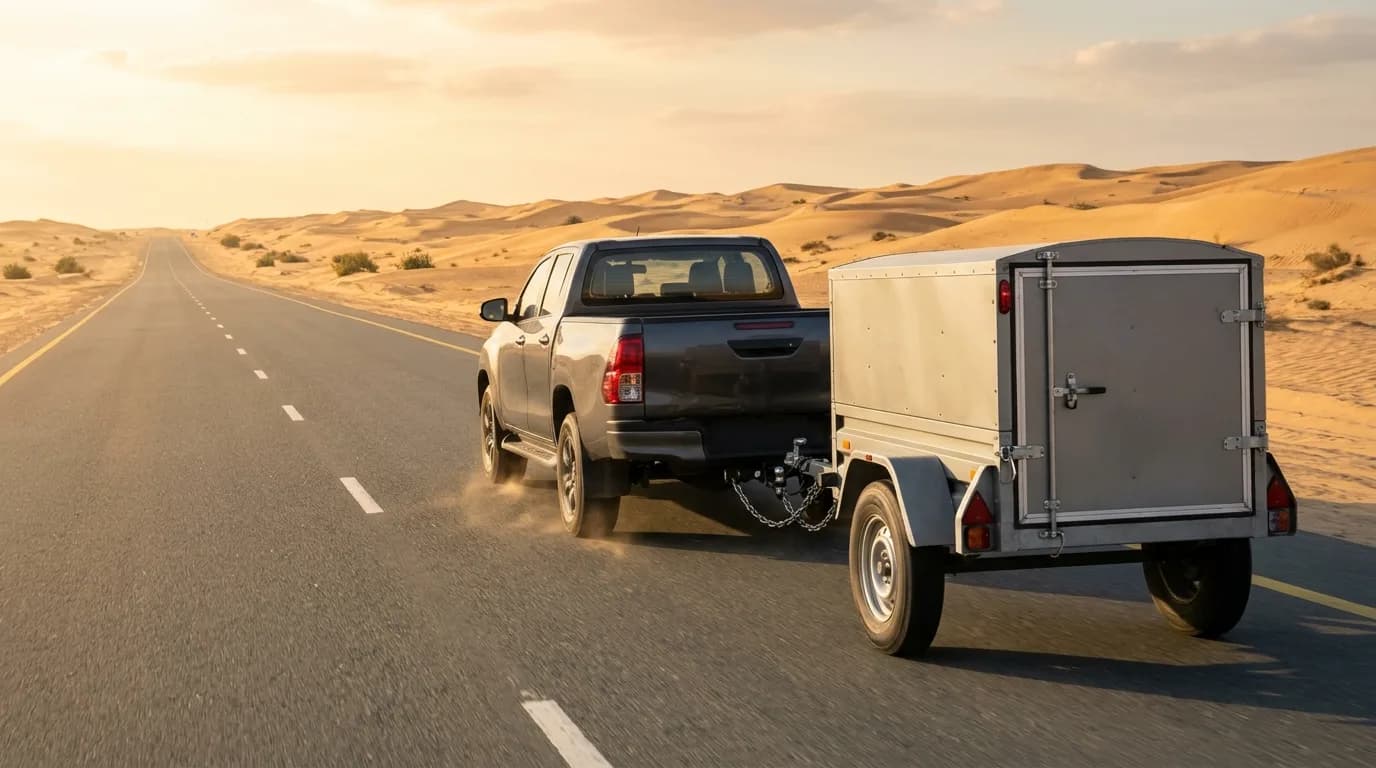
- Recovery points. Know where your vehicle's rated recovery points are. A tow ball is not one: it can snap off under a snatch load.
- Lights. Good off-road lights matter if a recovery runs past sunset.
What to carry
- A first-aid kit, and someone who knows how to use it.
- Plenty of water and food, more than you think you need.
- A shovel, and a flat, strong board to stand the jack on in sand.
- Recovery gear: a kinetic or snatch recovery strap and soft shackles.
- A tyre-pressure gauge and an air compressor.
- Jumper cables, a basic tool kit and a fire extinguisher.
- A charged phone, a power bank, offline maps or a GPS, and a torch. For trips far from the road, Dubai Police suggest a satellite phone.
- Warm clothes for the evening: desert nights get cold in winter.
Heavy gear rides better on a roof rack or carrier than loose in the cabin. Anything loose becomes a projectile on a steep dune.
On the sand
- Slow and steady. Dubai Police's guidance for desert drivers is to use four-wheel drive and drive slowly. Reckless driving on dunes can roll a car or bury it.
- Stick to used tracks. Police advise avoiding areas with no tyre marks and keeping to trails that others have travelled.
- Respect the crest. You cannot see what is on the far side of a dune. Approach the top slowly and straight, never at an angle.
- Stuck? Stop spinning the wheels, which only digs you deeper. Clear the sand from around the tyres, lower the pressure a little more, and recover with the strap and a second vehicle.
At camp: fire and litter
The Ministry of Interior's fire-safety rules for desert camping:
- Keep lanterns and other light sources at least 50 cm from the tent.
- Never use barbecues, coal or other heated equipment inside the tent.
- Keep a fire extinguisher nearby or inside the tent.
- No candles or lighters inside the tent.
- Store firewood at least 15 feet (about 4.5 m) from the tent.
Dubai Municipality has warned that dumping rubbish in the desert or setting fires in public places is fined AED 500, and that burning coal should never be left unattended at night. Take every bag of rubbish home with you.
The penalties for reckless desert driving
Ras Al Khaimah Police have reminded drivers that reckless driving in desert and wilderness areas, including endangering yourself, other people or property, can bring a fine of AED 2,000, 23 black points and up to 60 days' imprisonment. Use designated areas for dune bashing and events, and stay out of places that are signed as closed.
In an emergency
Call 999 for police and 998 for an ambulance. Share your live location with the people in your group and with someone at home, and stay with the vehicle: it is far easier to find than a person walking.
Getting the truck ready for the season? Bumpers, off-road lights and hitches are listed by model and year. If you are unsure what fits, send us your VIN through a part request.
Sources
- Gulf News — The outdoors are fun if you play by the rules (Dubai Police Search and Rescue: never alone, 15–20 PSI, supplies, 4x4 only, tracks).
- Gulf News — Safety campaign launched for drivers of desert tours in Dubai (four-wheel drive, drive slowly, tyre pressures, emergency supplies).
- Khaleej Times — Off-roading in UAE: how to avoid Dh2,000 fine, 60 days in jail (Ras Al Khaimah Police reminder, November 2023; group travel and recovery kit).
- Gulf News — Top mistakes that can land campers in trouble (Ministry of Interior fire rules; Dubai Municipality AED 500 fine).
PartMate sells parts and accessories. This article summarises published police and municipal advice for convenience; it is not legal advice. Check the rules of the emirate where you drive.
Not sure what fits your car?
Send us your make, model and year — we check fitment before you pay, and we would far rather answer a question than process a return.