
Dubai Speed Limit Changes: New Limits on Five Roads From 1 November 2026
The RTA and Dubai Police raised the limit on three Dubai streets and lowered it on two from 1 November 2026. The exact sections, the reasons the RTA gave, and what changes for drivers.
In this article
If you drive Al Rebat Street every day, the speed you are used to may now be over the limit. The Dubai speed limit changes that took effect on 1 November 2026 lowered the limit on that road and on Sheikh Sabah Al Ahmad Al Jaber Al Sabah Street, and raised it on three others. Here are the five roads with their exact sections, the reason the RTA gave, and what to do behind the wheel.
Last checked on 18 November 2026.
The five roads and their new speed limits
Dubai's Roads and Transport Authority (RTA) announced the changes on 21 October 2026, together with Dubai Police General Command. Each change applies in both directions, on the section named. Limits in km/h:
| Street | Section | Before | From 1 November |
|---|---|---|---|
| Al Asayel Street | Oud Maitha Street to Al Meydan Street | 60 | 80 |
| Al Mustaqbal Street | Sheikh Rashid Street to Al Meydan Street | 60 | 70 |
| Latifa bint Hamdan Street | Sheikh Zayed Road to Al Khail Road | 60 | 70 |
| Al Rebat Street | Marrakech Street to Sheikh Mohammed bin Zayed Road | 100 | 90 |
| Sheikh Sabah Al Ahmad Al Jaber Al Sabah Street | 2nd December Street to Khalid bin Al Waleed Street | 80 | 70 |
- Confirmed by the RTA: every figure and section in the table, the both-directions rule, and the new signs and reprogrammed cameras described below.
- Reported: Gulf News wrote on 1 November that the RTA and Dubai Police began enforcing the new limits that day, a Sunday. The National's opening line of 21 October said three roads were being cut and two raised; the list in the same article, like the RTA's text, Gulf News and Khaleej Times, shows three rises and two cuts. Some reports spell the first junction "Oud Metha"; the RTA writes "Oud Maitha".
Why the RTA changed the limits
The RTA says the new limits follow the 2026 update of the technical specifications in the Dubai Speed Management Manual, and an engineering and technical study carried out over recent months with an international consultant. The stated aims were better traffic flow, better road safety, and limits that suit each road's character and the traffic it carries. The RTA also ties the changes to the Dubai Traffic Safety Strategy and to the indicators of the 2025 action plan for evaluating road-safety performance, and calls them part of its regular reviews of speed limits on key streets.
Under the manual, limits are set by standardised engineering criteria. The RTA says they include:
- traffic volumes;
- the road's design speed;
- how built-up the land along the road is;
- actual vehicle speeds, assessed using the 85th percentile speed;
- pedestrian activity and other key facilities nearby.
The 85th percentile speed is the speed at or below which 85 per cent of vehicles travel, in the Institute of Transportation Engineers' definition. The RTA has not published the study or said which criterion decided each road, so we do not guess.
How the new limits are signposted and enforced
The RTA said it would replace the speed-limit signs on the affected sections to its approved specifications, and reprogramme the speed cameras to the adjusted limits in time for 1 November. Gulf News reported on 1 November that the signs had been updated and the cameras reprogrammed. The RTA's announcement says nothing about any margin above the limit, so drive to the number on the sign.
What drivers should do after the Dubai speed limit changes
- Read the signs, not your memory. The two cuts are where habit costs money. The old 100 km/h on Al Rebat Street is now 10 km/h over the limit, and so is the old 80 km/h on Sheikh Sabah Al Ahmad Al Jaber Al Sabah Street.
- Do not rely on an app's stored limit. A phone app or an in-car map is only as current as its last data update. The posted sign is the legal limit, and it is what the cameras have been reprogrammed to follow.
- Watch where each section ends. The changes cover the stretches between the junctions named above. Beyond them, follow the next sign.
- Leave room in the first weeks. Not every driver will have noticed the change. On the raised roads some will still hold the old 60 km/h while others take the new limit, so keep a longer gap and change lanes with care.
- Check your record. Our fines and black points guide explains where to check and pay a fine, and how black points lead to a suspension.
Speed limits elsewhere in the UAE that changed this year, and the federal traffic regulations that start on 1 January 2027, are in our traffic rules round-up.
What it means for parts and accessories
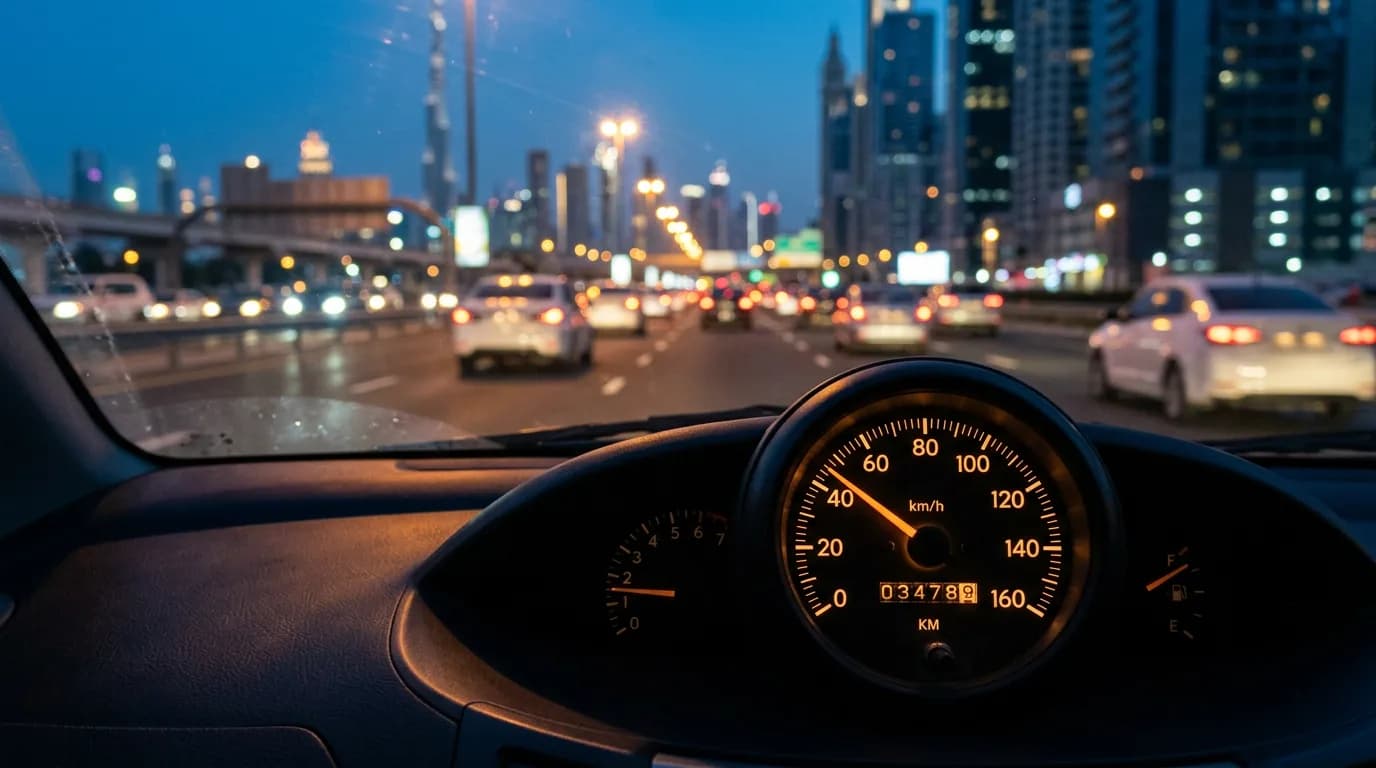
New limits change nothing about what fits your car. They do make one thing worth checking if you have changed wheels or tyres: the speedometer. Michelin's Middle East site notes that the speedometer takes the wheel diameter into account, so a tyre size outside the approved ones can make both the displayed speed and the recorded kilometres inaccurate.
The arithmetic is simple. A tyre 3 per cent larger in overall diameter covers about 3 per cent more road per turn. If the dial was accurate on the original tyres, it now shows 90 km/h when the car is doing about 93 (90 × 1.03 = 92.7). On a road that has just dropped from 100 to 90, that gap matters.
- Stay within the tyre sizes your maker approves. Michelin points to the door label or the owner's manual for them, and our modifications guide covers what the inspection accepts.
- If you run bigger tyres under fender flares, have a passenger compare the dial with a GPS speed reading on a straight, empty road before you trust it.
- If you ever need to dispute a fine, our dash cam guide lists the official routes and the privacy rules for footage. We stock a mirror dash cam with front and rear cameras.
Sources
- Roads and Transport Authority, Dubai — Updating the Maximum Speed Limits on 5 Key Streets Starting from 1 November 2026 (21 October 2026).
- Gulf News — Dubai to change speed limits on 5 key roads (21 October 2026) and New speed limits take effect on five major Dubai roads today (1 November 2026).
- Khaleej Times — Dubai announces new speed limits on 5 major roads from November 1 (21 October 2026, updated 30 October 2026).
- The National — Dubai sets new speed limits on five roads under traffic safety drive (21 October 2026, updated 22 October 2026).
- Institute of Transportation Engineers — Setting speed limits (undated; definition of the 85th percentile speed).
- Michelin Middle East — Can you change your tyre's size? (updated 7 October 2026).
PartMate sells car parts and accessories and is not connected with the RTA or Dubai Police. This article is general information, not legal advice: the signs on the road and Dubai's traffic authorities decide the limit that applies, and fines follow the official schedule.
Parts in this guide
All 18 fender flares

Not sure what fits your car?
Send us your make, model and year — we check fitment before you pay, and we would far rather answer a question than process a return.
Keep reading
 News9 min readUAE National Day 2026: Car Decoration Rules, Parades and the Fines Police Have Published
 News9 min readNew Pickup Trucks in the UAE for 2026: What Is Confirmed for the Hilux, Navara Pro and Jetour F700
 News9 min readVehicle Recalls in the UAE: How to Check Your VIN, Why the Fix Is Free and the 2027 Rule